.png)
A Curated List of the Most Iconic and Innovative Structures Built in the 21st Century
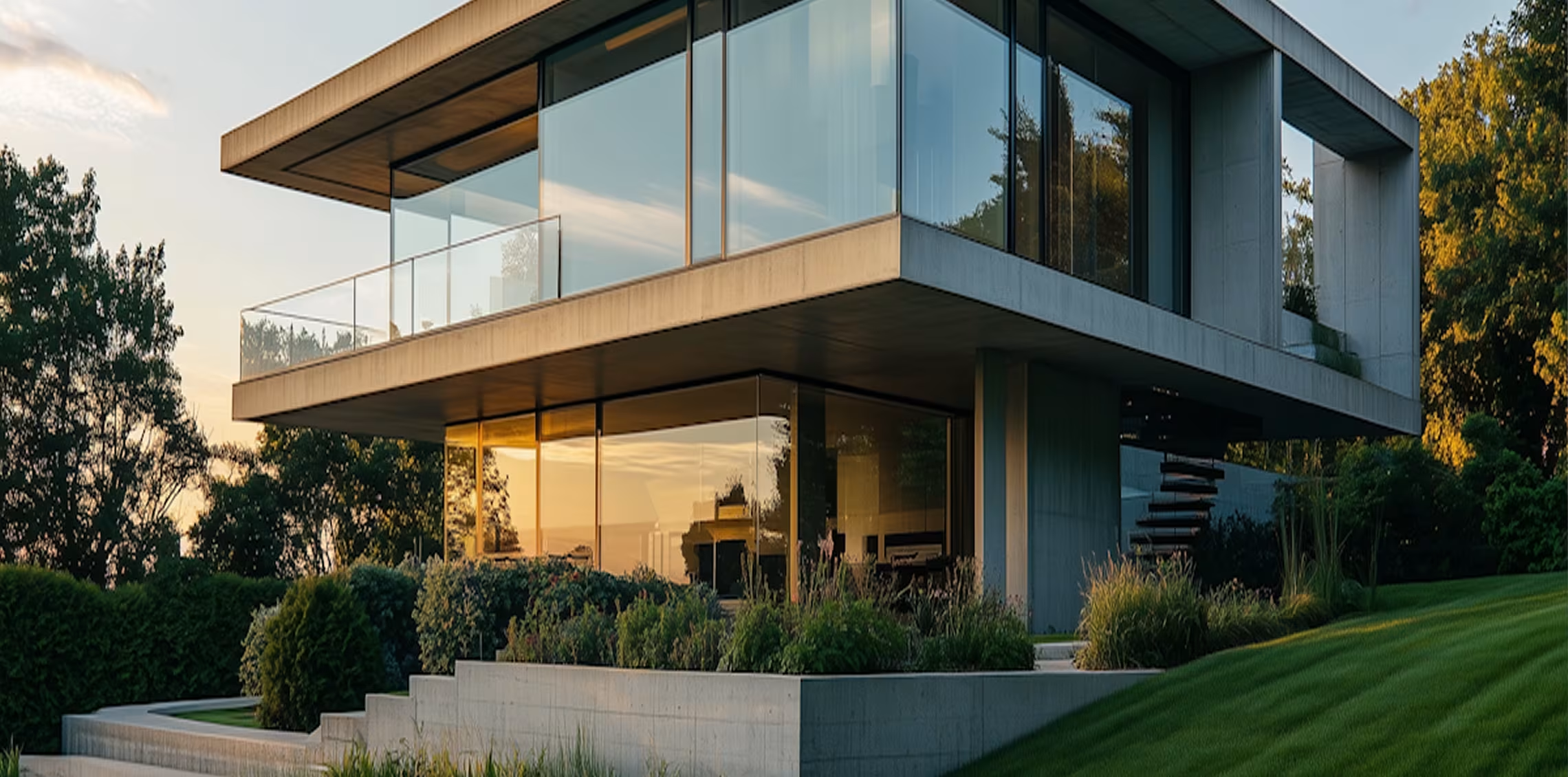
Architecture as a Statement
The 21st century has produced some of the most daring and technically complex buildings in human history. Advances in computational design, engineering, and materials science have given architects the freedom to pursue forms and functions that were previously impossible. These structures do more than shelter — they challenge assumptions, inspire conversation, and redefine the skylines and landscapes they inhabit.
Structures That Changed the Game
A handful of buildings completed since 2000 stand out not just for their visual impact, but for the ideas they represent and the boundaries they pushed in their time.
- Burj Khalifa, Dubai — the world's tallest building, a feat of structural and mechanical engineering
- The Shard, London — a vertical city redefining mixed-use high-rise design in a historic urban context
- Beijing National Stadium — an interlocking steel lattice that became a global symbol of innovation
- Heydar Aliyev Center, Baku — a seamless flowing form made possible only through parametric design
- The Edge, Amsterdam — widely regarded as the world's smartest and most sustainable office building
Engineering at the Limits
Many of the century's most celebrated buildings required entirely new engineering approaches to realize. Zaha Hadid's fluid geometries demanded custom fabrication workflows and advanced structural analysis tools. The Vessel in New York pushed the boundaries of prefabricated steel construction. These projects accelerated innovation not just in architecture but across the broader construction industry, creating new methods that have since become standard practice on projects of all scales.
Sustainability as Ambition
Some of the most iconic structures of the era are also among the greenest. The Bullitt Center in Seattle was designed to last 250 years, generating its own energy and treating its own water on site. The Bosco Verticale in Milan demonstrated that large-scale residential buildings could integrate meaningful biodiversity into their facades. These projects proved that environmental ambition and architectural excellence are not competing priorities — they are complementary ones.
What These Buildings Tell Us
The structures that endure as icons share a common quality: they were built with a clear point of view. Whether expressing structural honesty, cultural identity, environmental commitment, or pure formal innovation, each represents a deliberate act of design thinking. They remind us that architecture at its best is not just the art of building — it is the art of making ideas visible and permanent in the world.
.svg)